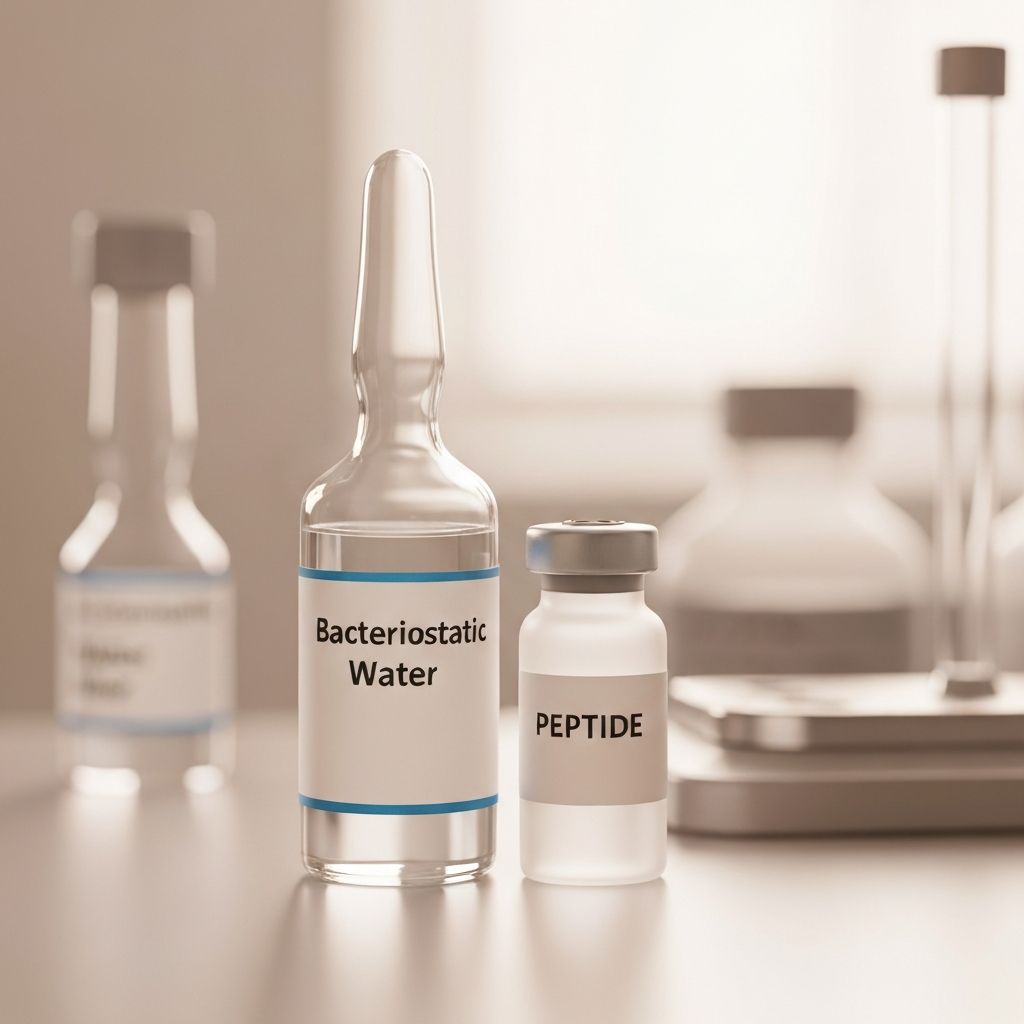
What You Need
Before reconstituting your peptide, gather these essential supplies:
- Lyophilized (freeze-dried) peptide vial
- Bacteriostatic water (BAC water) — NOT sterile water for multi-use
- Alcohol swabs for sterilization
- Insulin syringes (29-31 gauge recommended)
- Clean, flat work surface
DYK Data: 89% of community members use bacteriostatic water over sterile water for multi-use vials. BAC water contains 0.9% benzyl alcohol which prevents bacterial growth.
Step-by-Step Instructions
- Step 1: Wipe the rubber stopper of both the peptide vial and BAC water vial with an alcohol swab. Let dry for 10 seconds.
- Step 2: Draw your desired amount of BAC water into an insulin syringe. Most peptides use 1-2mL.
- Step 3: Insert the needle into the peptide vial at an angle, aiming for the inner wall — NOT directly at the powder.
- Step 4: Slowly depress the plunger, letting the water trickle down the vial wall onto the powder.
- Step 5: Remove the needle and let the vial sit. Most peptides dissolve within 1-2 minutes.
- Step 6: If needed, gently roll or swirl the vial. NEVER shake — this can damage the peptide structure.
Reconstitution Ratios by Peptide
Different peptides have different common reconstitution ratios based on typical dosing:
| Peptide | Vial Size | BAC Water | Concentration | Common Dose |
|---|---|---|---|---|
| BPC-157 | 5mg | 2mL | 2,500mcg/mL | 250-500mcg |
| TB-500 | 5mg | 2mL | 2,500mcg/mL | 2-5mg/week |
| Semaglutide | 5mg | 2mL | 2,500mcg/mL | 250-1000mcg/week |
| Tirzepatide | 10mg | 2mL | 5,000mcg/mL | 2.5-15mg/week |
| CJC-1295 | 2mg | 2mL | 1,000mcg/mL | 100-300mcg |
| Ipamorelin | 5mg | 2mL | 2,500mcg/mL | 200-300mcg |
Common Mistakes to Avoid
- Spraying water directly onto powder — this can denature the peptide
- Shaking the vial — always gently swirl instead
- Using sterile water for multi-dose vials — use BAC water to prevent contamination
- Not wiping stoppers with alcohol — introduces bacteria
- Adding too little water — makes accurate dosing difficult
Storage After Reconstitution
Once reconstituted, peptides must be refrigerated at 36-46°F (2-8°C). Most reconstituted peptides remain stable for 4-6 weeks when stored properly. Never freeze reconstituted peptides.