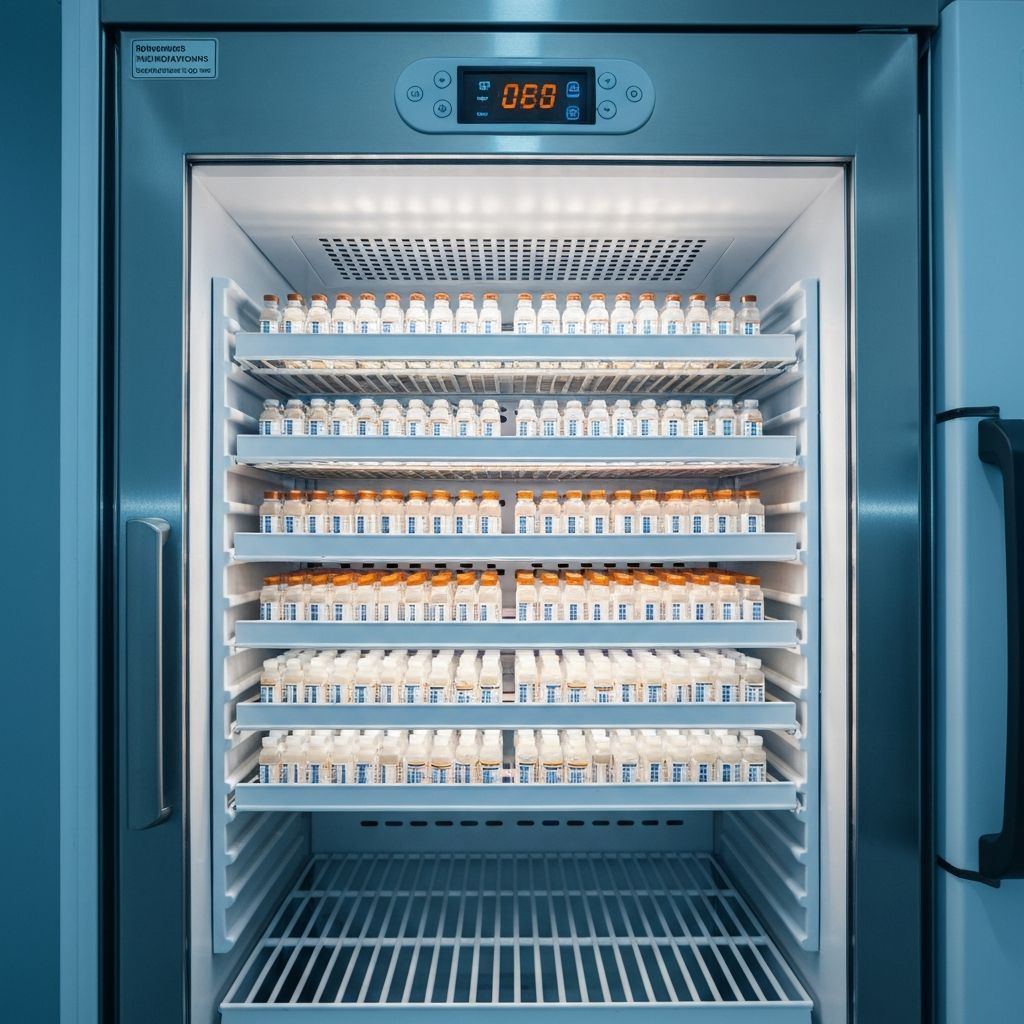
Storage Basics
Proper storage is critical for maintaining peptide potency. Peptides are proteins that can degrade when exposed to heat, light, moisture, or repeated temperature fluctuations.
DYK Data: Community reports suggest improperly stored peptides can lose 20-50% potency within weeks. Proper storage extends shelf life by months.
Before Reconstitution
Lyophilized (freeze-dried) peptides are relatively stable but still require proper storage:
- Long-term (months to years): Freezer at -20°C (-4°F)
- Short-term (weeks): Refrigerator at 2-8°C (36-46°F)
- Keep away from light — store in original packaging or wrap in foil
- Avoid moisture — keep sealed until ready to reconstitute
After Reconstitution
Once mixed with bacteriostatic water, peptides become more fragile:
- Always refrigerate at 2-8°C (36-46°F)
- NEVER freeze reconstituted peptides — ice crystals damage protein structure
- Keep vial upright to prevent stopper contact with solution
- Minimize temperature fluctuations — don't leave on counter during use
Shelf Life by Peptide
| Peptide | Unreconstituted (Frozen) | Unreconstituted (Fridge) | Reconstituted |
|---|---|---|---|
| BPC-157 | 2+ years | 6-12 months | 4-6 weeks |
| TB-500 | 2+ years | 6-12 months | 4-6 weeks |
| Semaglutide | 2+ years | 6-12 months | 6-8 weeks |
| CJC-1295 | 2+ years | 6 months | 3-4 weeks |
| Ipamorelin | 2+ years | 6 months | 3-4 weeks |